Multi-Location Management
One account for the whole company, whether that is two venues or forty
A chain is not a pile of separate restaurants that happen to share a logo. In Nine Tables your company is the account, and every venue sits under it. One guest book, one loyalty club and one gift card cover all of them, so the guest you met in Bergen is the same guest in Oslo, and a card sold at one venue is spent at another. Underneath that, each restaurant keeps what makes it itself: its own booking page, its own opening hours, currency and tax number, and its own payout account. One subscription, one invoice, one login — however many venues you run.
What you get
One guest book for the whole company
A guest exists once, not once per restaurant — the same phone number cannot become two people. Your guest list opens on every venue by default, each visit is stamped with the restaurant it happened at, and the guest sees that one history on their own page.
Learn more →Tonight, across every venue
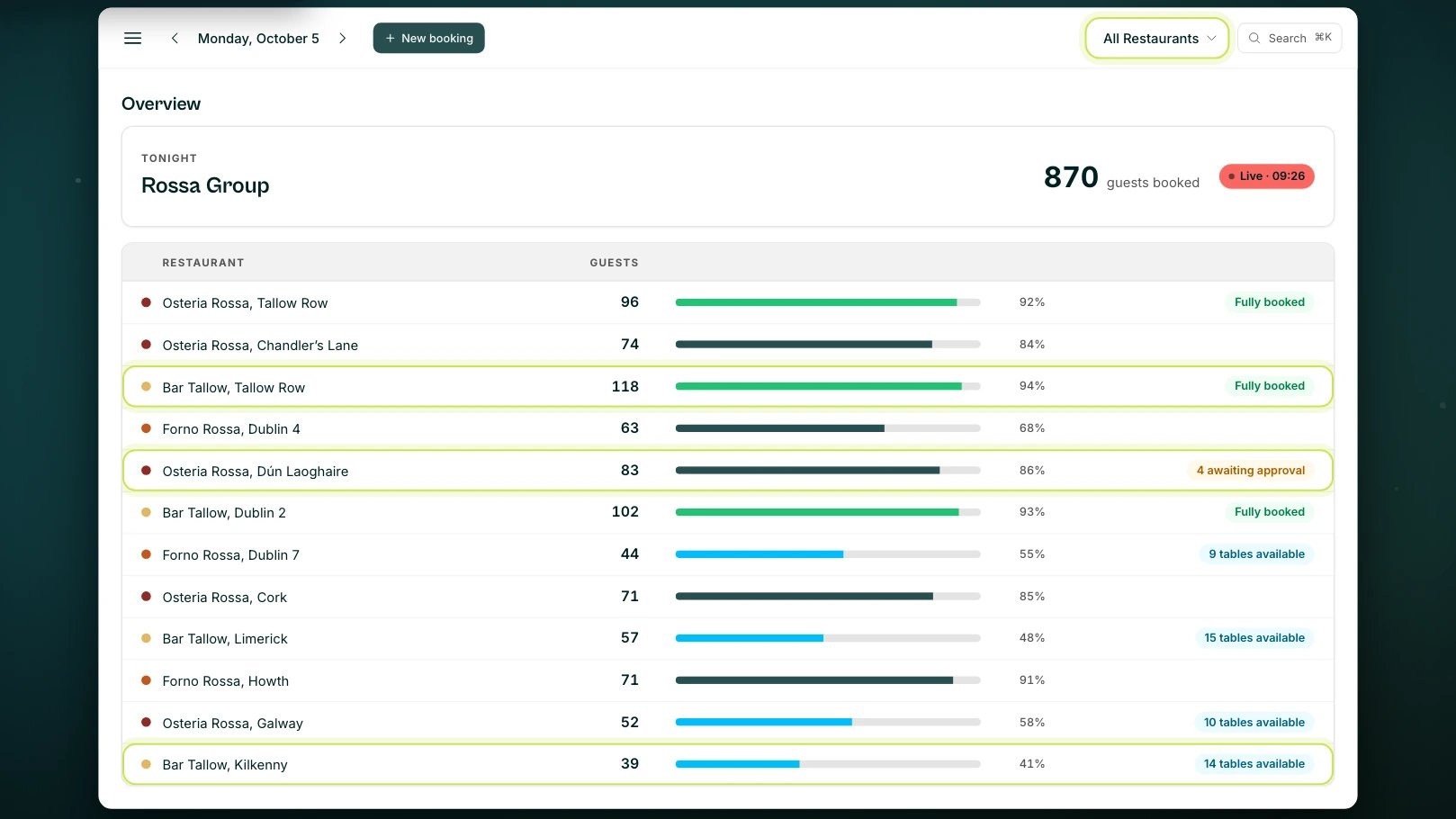
One screen shows tonight across the whole company: how full each restaurant is, which ones still have tables to sell, and where service is already under way. You stop opening venues one at a time to find out how the night is going.
One club, counted in visits
Your loyalty club belongs to the company, not to one address. It counts visits, so dinner at any of your restaurants moves a guest up the same ladder, and a reward earned at one is redeemed at another. A challenge can even be to visit every venue you run.
Learn more →A gift card that works everywhere
Gift cards carry no venue. One bought at your smallest cafe is spent at your busiest dining room, which is exactly what the person giving it expected. The settlement report splits redemptions by venue, so every till still reconciles.
Learn more →Every venue is still its own place
Each restaurant keeps its own booking page and theme, its own opening hours, currency, country, timezone, tax number and SMS sender name — and its own Stripe account, so booking money lands where it belongs. That booking page also offers your other venues with their logo and city, so a guest who cannot get a table at one can book another.
Learn more →Compare venues side by side
Put your restaurants next to each other on covers, no-shows and revenue. When one venue is doing something that works, you can see it in the numbers and take it to the others.
Access, venue by venue
Invite a colleague once and tick the restaurants they work at. They get one login that opens exactly those venues and nothing else. Staff logins are unlimited, so nobody has to share an account.
Share what should be shared
Set something once for the whole company where it should be the same everywhere, and let a restaurant differ where it has to. Opening hours, floor plan and experiences stay the venue's own.
One account behind all of it
One subscription, one trial, and one invoice that simply counts your restaurants. AI and SMS credits sit in a single pool the whole company draws from, and an app you install is live at every venue at once.
Open the next one yourself
Add a restaurant the day you decide to open it. Use a place you have already paid for, or see the prorated price before you confirm. A six-step wizard fills the address in from Google, and you bring your bookings with you: imports from ResDiary, DinnerBooking, Resos, EasyTable, Bordsbokaren and a Nine Tables CSV are tested against real exports.
Where one account pays off
The guest who eats at three of your places
She books your bistro in March, your bar in June and your hotel restaurant at Christmas. To you that is one guest with one history, and every visit counts toward the same club — so whichever door she walks through, your staff already know her.
Bought in Bergen, spent in Oslo
The card belongs to the company, so nobody has to explain to a guest why it only works at one address. At month end the settlement report splits every redemption by venue, and each restaurant's books still add up.
The day number twelve opens
You add the venue yourself, import the bookings from the system it came with, and tick the colleagues who will work there. It runs on the same subscription and the same invoice, and your guest book, your club and your gift cards reach it from day one.
Built for however your company is shaped
One brand in forty towns, or six brands in one city — the account is the company, and the venues sit under it.
See it in action
Getting started takes just minutes. Here's how it works.
- Your company is the account. Every restaurant sits under it with its own booking page, opening hours, currency, timezone, tax number and payout account.
- Switch venue from the top menu and the next restaurant's service is in front of you — same login, same screen, no second system to learn.
- Invite a colleague once and tick the restaurants they work at. A venue manager sees their own place, an area manager sees their four, and you see all of them.
- Guests, loyalty visits and gift cards belong to the company rather than to one restaurant, so everything a guest has done with you follows them to whichever venue they book next.