January 19, 2025
8 min read
Faster table turns mean more revenue. But rushed guests don't return. Here's how to optimize turnover while keeping the experience great.
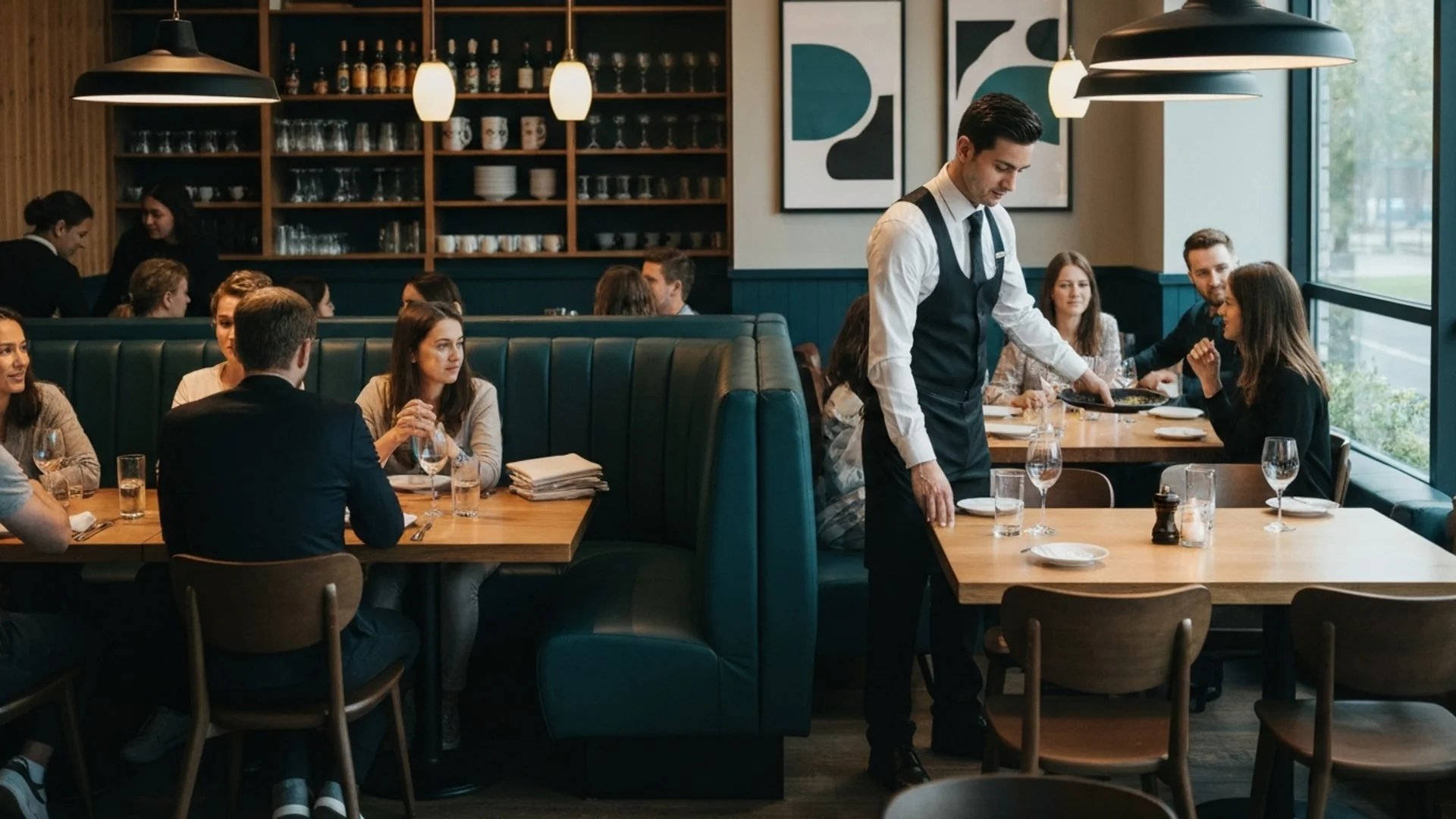
Every restaurant faces a fundamental tension: more table turns mean more revenue, but rushed guests leave bad reviews and do not come back.
The restaurants that solve this equation do not choose between efficiency and experience. They find ways to improve both simultaneously, and the key is understanding exactly where time gets lost -- and then eliminating waste without removing hospitality.
A 50-seat restaurant with an average check of 40 EUR:
That is 1,000 EUR per night, 30,000 EUR per month -- from the same seats, same staff, same overhead. The only difference is pacing.
But here is the catch: if you lose 10% of guests due to a rushed experience, you have lost more than you gained. A guest who feels hurried will not return, and they will tell friends. The lost lifetime value of that guest far exceeds the revenue from one additional table turn.
The goal is not faster turns. It is smarter turns. The distinction matters because speed without thought creates friction, while efficiency with awareness creates flow.
Before optimizing, you need to understand where time actually goes. Most restaurants assume the meal itself takes too long. In reality, the biggest time sinks are the gaps between activities -- the dead time where nothing is happening for the guest but their table remains occupied.
Guests are seated. They wait. And wait. The server is busy with another table. Five minutes pass. Ten minutes. That is time wasted for everyone -- the guest is frustrated, and the table clock is ticking without any revenue being generated.
This gap between seating and first interaction is one of the largest time sinks in any restaurant. It sets a negative tone for the entire experience and delays everything that follows.
Without guidance, some guests spend 15 minutes deciding. With good recommendations and clear menu design, they order in 5. The difference is not about rushing -- it is about removing friction from the decision-making process.
Staff who can confidently recommend dishes, specials, and pairings help guests decide faster while actually improving the experience. "Our chef recommends the sea bass tonight" is both helpful and efficient.
Orders stack up. The kitchen falls behind. Entrees come 40 minutes after appetizers. The table that should be done at 8 PM is still eating at 8:30 PM. This is not a table problem -- it is a flow problem, and it cascades through the entire evening.
When the kitchen cannot see what is coming, they cannot prepare. When they cannot prepare, they fall behind. When they fall behind, every table in the restaurant suffers.
Guests are done. They want to pay. The server is in the weeds. The guests sit for 15 minutes with empty plates, annoyed and occupying a table that could be reset. This is perhaps the most frustrating gap for guests because they have already mentally left the restaurant but physically cannot.
Research shows that guests who wait more than 5 minutes for the check after requesting it rate their overall experience significantly lower -- even if the food and service were excellent up to that point.
Table gets cleared. Then cleaned. Then reset. Then inspected. Five minutes becomes ten. Every minute of reset time is a minute of lost revenue, and unlike the dining experience itself, guests are not present during this phase, so speed here has zero negative impact on hospitality.
Each of these gaps is an optimization opportunity that does not affect guest experience negatively. In fact, eliminating them improves the experience.
Stagger reservations in 15-minute intervals instead of clustering them on the hour and half-hour.
The 6:45 PM reservation starts their meal before the 7:00 PM rush hits. The 7:15 PM table finishes before the 8:00 PM wave arrives. Kitchen pressure spreads out. Service stays smooth. Same number of covers, but dramatically smoother flow.
Nine Tables lets you configure reservation time slots with custom intervals. Instead of the default half-hour blocks, you can set 10-minute or 15-minute intervals, automatically spreading arrivals across the evening. The visual timeline shows you exactly how reservations distribute across each service period, making it easy to spot and prevent clustering before it happens.
Not every table needs the same amount of time. A couple ordering a quick weeknight dinner needs 60 minutes. A group of six celebrating a birthday needs 120 minutes. Assigning the same duration to both wastes capacity or creates conflicts.
Nine Tables supports dynamic reservation lengths based on party size, day of week, and time of day. A table of two at 7 PM on a Tuesday might get 75 minutes, while a table of six on Saturday evening gets 120 minutes. The system calculates this automatically, so you always know exactly when a table will be available for the next guest.
This precision means you can accept more bookings with confidence. You are not guessing whether a table will turn in time -- the system tells you.
Good restaurants position before the rush:
When the first guest arrives, the team is serving -- not preparing. This pre-positioning eliminates the most common early delays and sets the pace for the entire evening.
The first 30 minutes of service often determine the flow of the entire night. If those 30 minutes are chaotic, recovery is difficult. If they are smooth, the momentum carries.
The kitchen should know what is coming. Not in vague terms, but in specific, actionable detail. Your reservation system should show:
A kitchen that sees "four 4-tops arriving at 7 PM, one gluten-free, one birthday" can prepare differently than one blindsided by walk-ins. They can pre-prep ingredients, stage cooking times, and plan the sequence.
Nine Tables' timeline view gives the kitchen this visibility. Every reservation shows party size, special requests, and notes. The kitchen does not need to wait for a server to relay information -- they can see the evening mapped out in advance.
Smart table management means knowing at a glance:
With this visibility, hosts can give accurate wait times and servers can prioritize appropriately. Without it, everyone guesses, and guessing creates delays.
Nine Tables' floor plan shows real-time table status. Color coding tells you instantly which tables are at which stage. You do not need to walk the floor to know the state of your restaurant -- it is visible on one screen.
When the host knows that table 4 is on dessert and table 7 just ordered mains, they can tell a waiting guest "about 15 minutes" with confidence. Accurate wait times improve guest satisfaction even when there is a wait.
When guests finish their main course, do not wait for them to ask for the check. Offer:
"Can I bring you anything else, or would you like me to bring the check when you are ready?"
This plants the seed without rushing. Many guests who had not thought about leaving will now naturally move toward paying. Those who want dessert will order it. Those who want to linger will say so. Either way, you have moved the process forward without creating pressure.
Train servers to deliver this line naturally, as part of attentive service rather than as a hurry-up signal. Timing matters: offer after the plates are mostly clear, not while guests are still eating.
Professional reset should take 3 minutes, not 10:
Speed in reset does not affect guests -- they have already left. This is pure operational efficiency with zero hospitality cost. Yet many restaurants treat reset casually, adding 5-7 minutes of dead time between each party.
Pre-bus throughout the meal. Remove empty plates, used cutlery, and finished drinks as the meal progresses. By the time guests leave, the table is already half-cleared.
Rushed experiences that hurt more than they help:
A 5-minute faster turn means nothing if you lose the repeat visit. A regular who comes once a month for years is worth thousands in revenue. One rushed evening can end that relationship permanently.
You cannot improve what you do not measure. Track these metrics consistently:
Then improve systematically. A minute saved in each phase adds up to 15-20 minutes per table per evening. Across 20 tables, that is 300-400 minutes of recovered capacity every night.
Nine Tables tracks table times automatically. You can see average seating duration by party size, day, and time slot. Over weeks, patterns emerge: maybe Tuesday dinners turn in 70 minutes but Saturday dinners take 100. That data drives smarter scheduling and staffing.
Technology does not replace good hospitality. It amplifies it. Nine Tables provides the visibility that lets your team make better decisions faster:
Each feature saves minutes per table. Minutes multiply across an evening. Over a month, the cumulative effect is substantial: more covers served, more revenue generated, and better experiences delivered.
When tables are fully booked, a well-managed waitlist turns potential lost guests into served guests. The key is accuracy: if you tell a guest "20 minutes," it had better be close to 20 minutes.
Nine Tables' waitlist feature integrates with the table timeline. When a table is nearing completion, the system can automatically notify the next waitlisted party via SMS. The guest gets a message, walks back to the restaurant, and sits down at a freshly reset table. No awkward waiting at the door, no uncertain timing.
This automation means the gap between one party leaving and the next sitting down shrinks from 15 minutes to 5. That is one extra turn per table per busy evening.
Technology provides visibility, but your team provides the execution. Train staff on these efficiency habits:
The best-run restaurants make efficiency invisible. Guests feel cared for, not managed. The service feels attentive, not rushed. Tables turn faster, but the experience feels unhurried.
Beyond the real-time tools already mentioned, Nine Tables provides analytics and simulators that help you understand and optimize table turnover systematically:
See your actual turnover rates compared to your optimal targets. Track average seating duration by party size, day of week, and time slot. Over weeks, patterns emerge that drive smarter scheduling and staffing decisions.
Test how changing your default reservation durations would impact revenue. What happens if you shorten Tuesday dinner slots from 90 to 75 minutes? The simulator shows you the potential impact on covers and revenue before you make any changes.
Analyze seat waste across your floor plan. A party of two at a four-top means two empty seats. The simulator shows your seat utilization rate and recommends table combinations that minimize waste while maintaining guest comfort.
Get recommendations for optimal table pairings based on your layout and booking patterns. Know which tables to combine for larger parties and which configurations maximize your total seating capacity during peak hours.
Model different waitlist strategies and see their impact on conversion rates. How many guests convert from waitlist to seated? What is the optimal notification timing? The simulator helps you fine-tune your approach based on your actual data.
The floor plan view shows every table's current status at a glance -- who is seated, who is on dessert, who is paying, and which tables are being reset. Color coding makes it immediate, so your team spends less time walking the floor and more time serving guests.
The best restaurants make efficiency invisible. Guests feel cared for, not managed. They leave satisfied, not ejected. They remember great food and warm service, not the feeling of being hurried out the door.
That is the goal: faster turns that feel slower. More covers that feel more personal. Better business that creates better experiences.
It is not easy. But with the right systems, the right tools, and the right training, it is entirely achievable. The restaurants that master this balance do not just survive -- they thrive.