April 23, 2026
8 min read
Anniversary diners spend 40% more per person. But the real value is not the check — it is the couple who comes back every year for the next twenty.
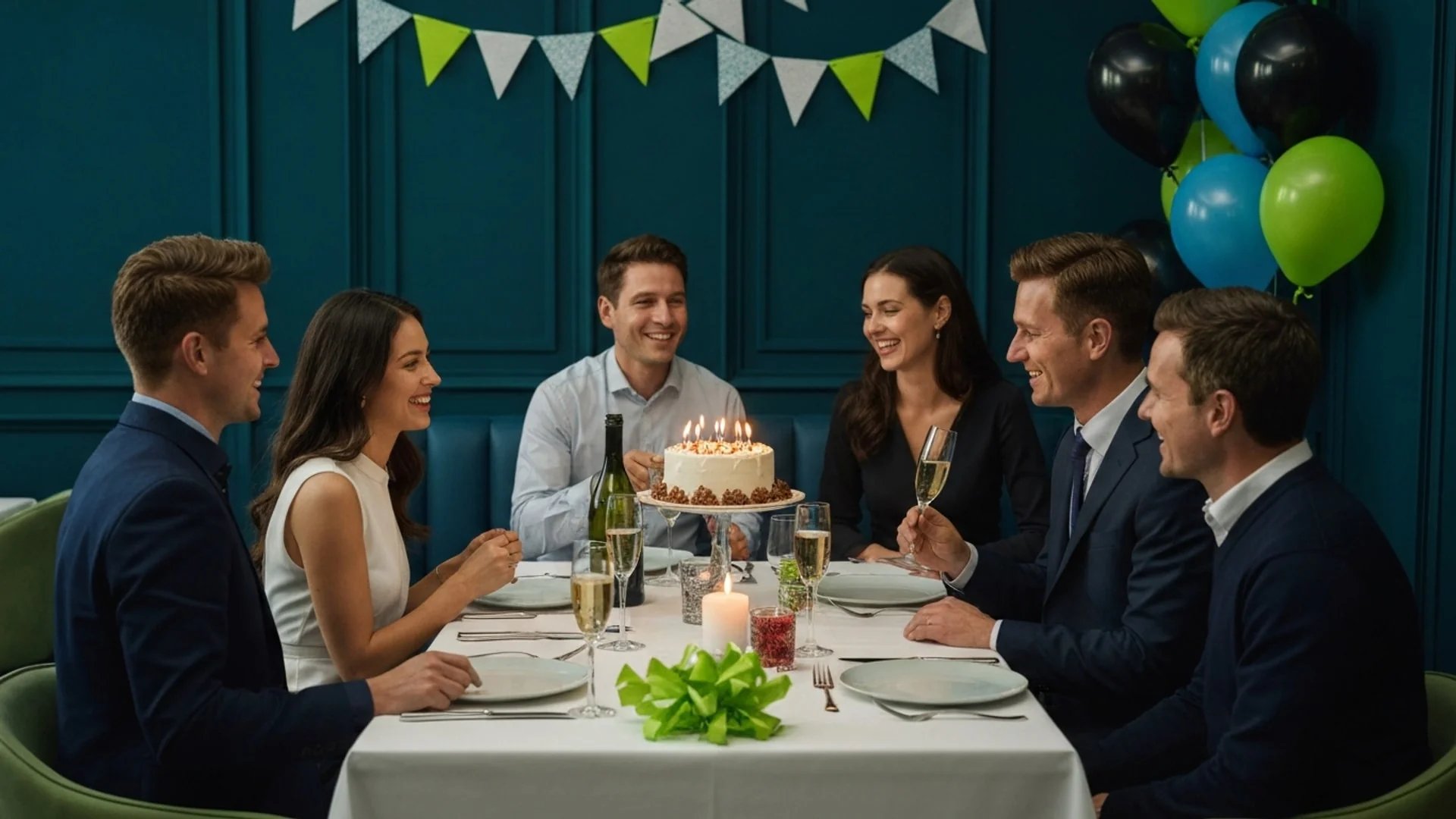
Nobody forgets where they celebrated their 50th birthday. The restaurant, the table, the moment the dessert arrived with a candle — these details anchor themselves in memory. The place becomes part of the story.
Anniversary diners spend 40% more per person than on an ordinary visit.
That number is worth holding for a moment. Not because the higher check matters most — it does, but it is not the point. The point is what happens next. The couple who celebrated their fifth anniversary at your restaurant does not start from zero when their sixth comes around. They already have a place. You are their anniversary restaurant. And the 40% premium is not a one-time event. It recurs. Year after year, for as long as the food is good and the experience holds up.
The free birthday dessert everyone offers? That is the least valuable thing you can give a celebration guest. The most valuable thing is remembering them next year.
44% of Americans say celebrating a special occasion is a primary reason they enjoy dining out.
These are not casual Tuesday dinners. The dynamics are different in every way that matters to your business:
Higher spend. The 40% anniversary premium is the most documented figure, but the pattern holds across celebration types. Valentine's Day — a celebration proxy — produces a 25% average ticket increase with a 41% surge in transactions.
Larger parties. Birthday dinners typically bring 5-6 guests. A regular who normally dines as a couple brings their extended circle for a celebration — and each of those guests is a potential new regular who now knows your restaurant exists.
Advance booking. While 52% of regular reservations are made less than 24 hours ahead, celebration bookings come in 2-4 weeks early for casual dining, 3-4 weeks for fine dining, and 4-6 weeks for peak dates.
That advance notice is a gift. It gives your team time to prepare, to assign the right table, to brief the server, to do the small things that turn a dinner into a memory.
Social amplification. 85% of diners share positive restaurant experiences on social media. For celebrations, the rate is higher — birthday photos, anniversary dinners, and group shots are among the most-shared restaurant content.
When a birthday group of six posts a photo tagged at your restaurant, it reaches hundreds of people in their network. That is word-of-mouth at scale, and it costs you nothing beyond delivering a good experience.
A single field in the booking form transforms your preparation for celebration guests:
"Is this for a special occasion?"
That is it. Optional. Not intrusive. But when a guest selects "Birthday" or "Anniversary," you go from anonymous table 7 to "Sarah's 30th birthday, party of 8."
The difference in what you can deliver with that information is enormous.
Note the occasion so every team member who touches the table knows about it. Brief the service team during pre-shift. Prepare whatever your restaurant's celebration gesture is — a reserved card, a decorated plate, a specific table hold. Assign their preferred table or your best available spot.
Greet by name. Acknowledge the occasion warmly but not theatrically. "Happy birthday, Sarah. Welcome — we have your table ready." Seat them somewhere that matches the celebration, not tucked in a corner unless they specifically requested privacy.
It is 7:30 PM on a Friday. The host has the reservation list on the screen. She sees "Anniversary — 10 years" next to the Andersen booking. She tells the server. The server mentions it naturally while taking drink orders. The couple exchanges a look — surprised, pleased. They did not expect anyone to notice. That moment costs your restaurant nothing and earns you everything.
Check in without hovering. Match the pacing to the celebration — do not rush a birthday dinner through the same 90-minute turnover as a Tuesday two-top. Coordinate timing for any dessert moment. Offer to take a group photo at a natural pause.
A complimentary dessert with a candle is fine. A handwritten note from the chef on a milestone birthday is better. A suggestion for a photo spot in the restaurant — your garden terrace, your wine wall, your beautiful bar — gives them content to share and a visual memory of the evening.
Then the most important step: record everything. The date, the occasion, the table, the party size, the preferences. This data is the foundation of the relationship that follows.
Most restaurants wait for the guest to book their next celebration. The restaurants that grow celebration business do something different: they reach out first.
Anniversary-related messages boost guest return rates by up to 30%. When tied to a loyalty programme, lifetime value increases 20-40%.
Birthday emails specifically achieve a 56% open rate — compared to 17% for standard marketing emails. The transaction rate is roughly 5x higher.
The Experian data is older, but the mechanism has not changed. A message that says "Sarah, your birthday is coming up on March 15th. Last year you celebrated at our corner table with 8 guests. We would love to host you again" is not marketing. It is hospitality delivered digitally. It feels personal because it is personal — it references a real experience, a real table, a real evening.
The key is timing. Four weeks before the date gives the guest time to plan. Too early and it gets lost. Too late and they have already booked elsewhere.
Four weeks out: "Your anniversary is coming up. We would love to host you again." One week out (if they have not booked): "Still looking for your anniversary dinner? Your table is waiting." The second message converts guests who intended to come back but had not gotten around to booking.
Couples are fiercely loyal to their "anniversary restaurant." The place they went for their first or second anniversary often becomes where they return year after year.
The mathematics of this loyalty are striking. A couple celebrating anniversaries at your restaurant for 15 years represents:
At a EUR 50 average check with the 40% celebration premium, each anniversary dinner is EUR 140 for the couple. Over 15 years, that is EUR 2,100 in anniversary dinners alone. Add 3-4 regular visits per year at EUR 100 per couple, and the lifetime value exceeds EUR 6,000 — from one couple, acquired through one good experience on one evening.
The cost of acquiring that customer for life: a well-prepared table, an acknowledged occasion, and a complimentary dessert.
Celebrations come in forms that many restaurants overlook:
Train your team to read the room even when the booking does not mention an occasion. A table with "Congratulations" balloons has different energy than a quiet couple on their regular date. Staff who notice and respond — "It looks like you're celebrating something special tonight" — create moments that feel genuinely attentive rather than scripted.
Celebrations always involve photos. Your restaurant's photogenic qualities are free marketing when they appear in celebration posts.
69% of millennials photograph their food for social media. 79% say user-generated content influences their dining decisions.
What this means practically:
When a birthday dinner photo tagged with your restaurant's location appears on social media, every person who sees it — friends, family, colleagues — now associates your restaurant with celebration. That association is worth more than any paid advertisement because it comes with the implicit endorsement of someone they trust.
Track these metrics to understand what celebrations mean for your restaurant:
If celebrations represent 10% of your bookings but 25% of your revenue, that ratio tells you where to invest. The guest profile data that makes proactive outreach possible — stored birthdays, anniversary dates, past table preferences — is the infrastructure that turns one-time celebrations into recurring revenue.
74% of diners say they plan to return to a restaurant where they had a unique experience.
A birthday is not a one-time event. It comes back every year. An anniversary is not a one-time event. It comes back every year. A couple celebrating at your restaurant creates a tradition that, maintained well, lasts decades.
The restaurant that captures the first celebration and delivers on it does not earn a customer. It earns a tradition. And traditions, once established, are remarkably difficult for competitors to break.
A candle on a dessert is nice. Remembering to invite them back next year is how you build a restaurant people belong to.