April 23, 2026
7 min read
A 9-table restaurant pays the same per-cover fee as a 90-table chain — but absorbs 100% of the cost with no volume buffer. The economics no longer justify it.
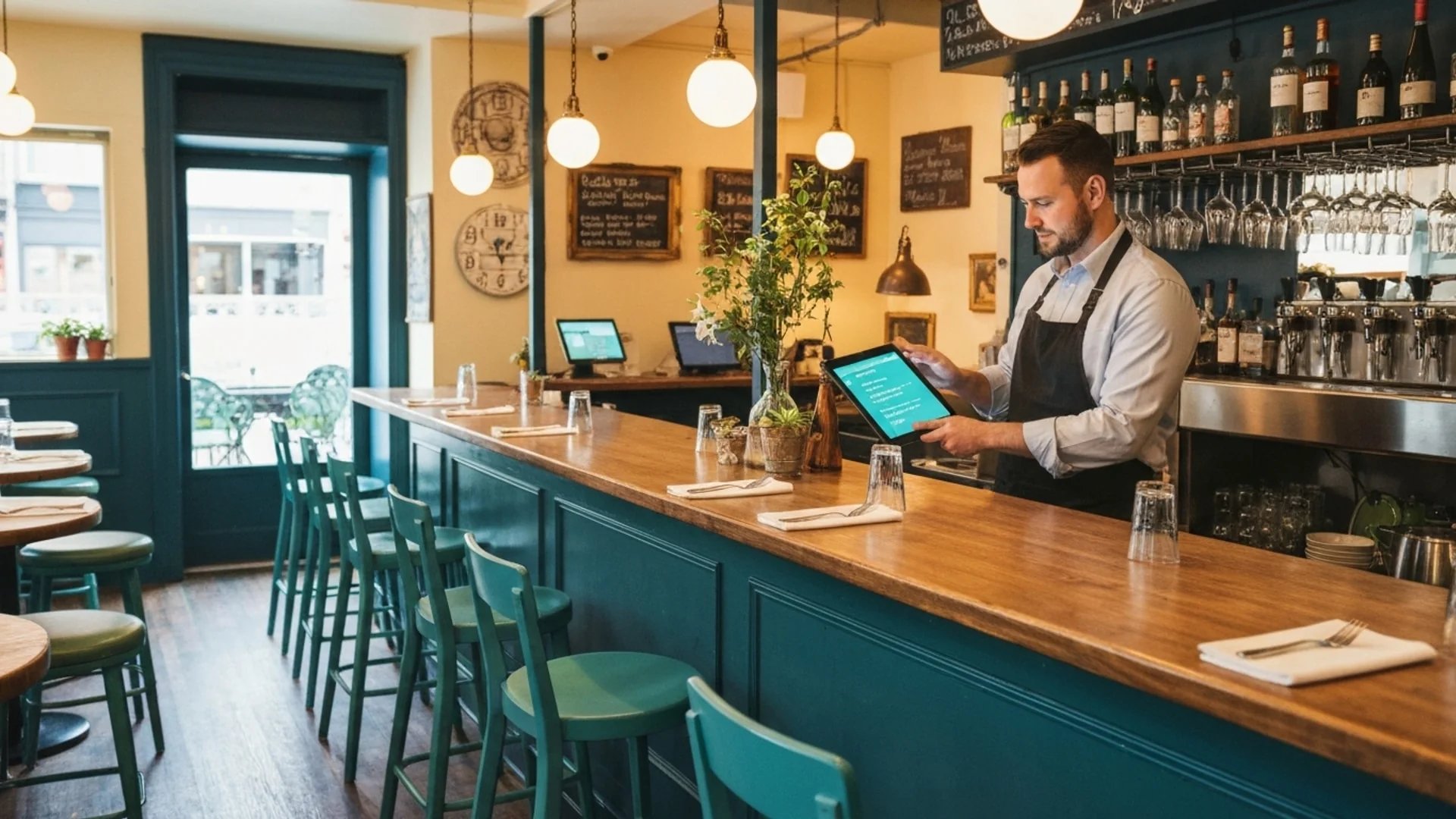
A single no-show at a 9-table restaurant wipes out 11% of the evening's capacity. At a 90-table restaurant, that same no-show is barely a rounding error — 1.1%.
The operational challenge is identical. A guest booked and did not arrive. But the financial damage is ten times more concentrated for the smaller restaurant. And yet the software designed to prevent that no-show — automated reminders, deposit systems, guest history tracking — has historically been priced for the 90-table operation.
We named our company Nine Tables because we believe the smallest restaurants deserve the best tools. That belief is not charity. It is economics.
Roughly 70% of all restaurants in the United States are single-unit independents.
That is not a niche. It is the industry. The neighbourhood bistro, the family-run trattoria, the chef-owner doing 40 covers a night — these are not the margins of the restaurant business. They are its centre.
And 42% of restaurant operators were not profitable last year.
Nearly half the industry is operating at a loss. In that context, the tools that help restaurants manage bookings, reduce no-shows, and fill seats are not optional upgrades. They are the difference between staying open and closing. The restaurants that need these tools most are the ones least able to afford them under the current pricing models.
Most reservation platforms charge per cover — a fee for every guest seated through the system. Fees range from $0.25 to over $2 per diner, depending on how the guest found the restaurant.
The arithmetic is straightforward. A restaurant seating 3,000 covers a month at $1.50 per cover pays $4,500 monthly — $54,000 per year — in reservation fees alone. For a restaurant operating on 3-5% net margins, that is not a software cost. It is one of the largest line items on the P&L.
Here is where the model breaks for small restaurants specifically: a 9-table bistro and a 90-table chain pay the same rate per cover. But the chain negotiates volume discounts, amortises the cost across locations, and absorbs it into an operations budget designed for scale. The independent absorbs 100% of the cost against a single location's thin margins.
Have a great month with more covers? Your software bill scales up with it. The better you perform, the more you pay. That is not a tool. It is a tax on success.
Per-cover pricing charges the same rate for every guest, regardless of how they found you. A regular who has been coming every Friday for three years and books through your website pays the same fee as a first-time guest who found you through the platform's marketplace.
Think about that. Your loyal guest — the one you acquired years ago, who needs no marketing, who would call if the website were down — generates a fee every time they book. The platform is charging you for a customer you already have.
Nick Kokonas, co-founder of Alinea and the ticketing platform Tock, put it directly: "The independents will have to pay up by accepting a percentage of gross that's higher for 'incremental diners.'"
The implication: per-cover models treat every booking as if the platform generated it. For restaurants where most bookings come through their own website or phone, the majority of those fees are paying for a service the platform did not provide.
Restaurants spend approximately 1.97% of gross revenue on technology. The average across all industries is about 7%.
Restaurants spend 3.5x less on technology than the average business. That is not because they need less technology. It is because the technology available to them has been priced to extract maximum revenue per transaction rather than to serve the category.
The result: 31% of restaurant operators who want a digital reservation platform cite cost as the primary barrier.
Nearly a third of the market knows they need the tool and cannot afford it. That is not a market functioning well. That is a market where pricing is doing the opposite of what pricing should do — it is excluding the customers who would benefit most.
The economics that originally justified per-cover pricing no longer exist.
Building restaurant software in 2010 required significant infrastructure investment. Servers, databases, dedicated operations teams — the fixed costs were high, and per-transaction pricing was one way to recoup them from a fragmented customer base that could not afford large upfront fees.
Cloud infrastructure has changed that equation. AWS alone has reduced prices 134 times since 2006. The cost of serving one additional booking through a modern cloud system is effectively zero at scale.
The infrastructure cost that justified per-cover pricing has collapsed. But the pricing model persists — not because it needs to, but because the companies built around it would lose revenue from large customers who are accustomed to paying that way.
A flat-rate model becomes more economical than per-cover for any restaurant processing more than about 150 covers per month — roughly 5 reservations per day. That threshold is so low that virtually every established restaurant exceeds it within the first week.
Every restaurant, regardless of size, needs the same core capabilities:
Online booking. 59% of guests prefer to book online, and 65% go directly to the restaurant's website to do it.
Automatic confirmations and reminders. No-shows cost the average restaurant $1,500-$3,000 per month. For a 9-table restaurant, even one no-show per evening at a EUR 45 average check is EUR 1,350 per month — revenue that cannot be recovered because the table sat empty during peak hours.
Guest history. Knowing that a returning guest prefers a corner table, has a nut allergy, and celebrated their anniversary with you last year — that is the kind of personalisation that turns a good meal into a lasting relationship. Large restaurants have staff turnover that erases institutional memory. Small restaurants should have the advantage here, and software that preserves guest preferences makes that advantage permanent.
Real-time availability. A 9-table restaurant cannot afford to double-book. The margin for error is zero. Real-time availability that syncs across the phone, the website widget, and walk-in management is not a luxury feature. It is basic infrastructure for a floor plan that tight.
Mobile access. The owner who checks bookings from the kitchen, the floor manager who adjusts a table assignment during service, the chef who sees a VIP note before the guest arrives — mobile access is not about convenience. It is about a restaurant where everyone has the information they need in the moment they need it.
These are not enterprise features. They are basics. The fact that they were locked behind enterprise pricing for years says more about the software industry than about restaurants.
When small restaurants have access to the same tools as large ones, the competition shifts. It stops being about who can afford better software and starts being about who cooks better food and provides better hospitality.
A neighbourhood bistro with 9 tables, good food, and a modern reservation system competes on equal footing with the chain down the street. The owner spends less time on the phone managing bookings and more time in the dining room. No-shows drop because reminders go out automatically. Guest preferences are remembered because the system remembers them, not because the owner has a perfect memory.
The playing field levels. That is not a metaphor. It is what happens when the tools stop being a competitive advantage reserved for those with the biggest budgets.
When evaluating reservation software, the question is not "how much does it cost per booking?" The question is "how much does it cost when I succeed?"
If the answer scales with your success — the busier you get, the more you pay — the model is working against you. If the price is the same whether you seat 100 guests or 1,000, the model is aligned with your goals.
Look for flat-rate pricing. Full features without tiers. No per-booking surcharges. The same tools whether you have 9 tables or 90.
A restaurant should not have to grow to afford good software. Good software should help it grow.