April 21, 2026
9 min read
Your Google rating gets obsessed over. Your booking widget gets ignored. But e-commerce data shows conversion drops 78% between a 1-second and 4-second page load. How many guests are you losing before they even finish booking?
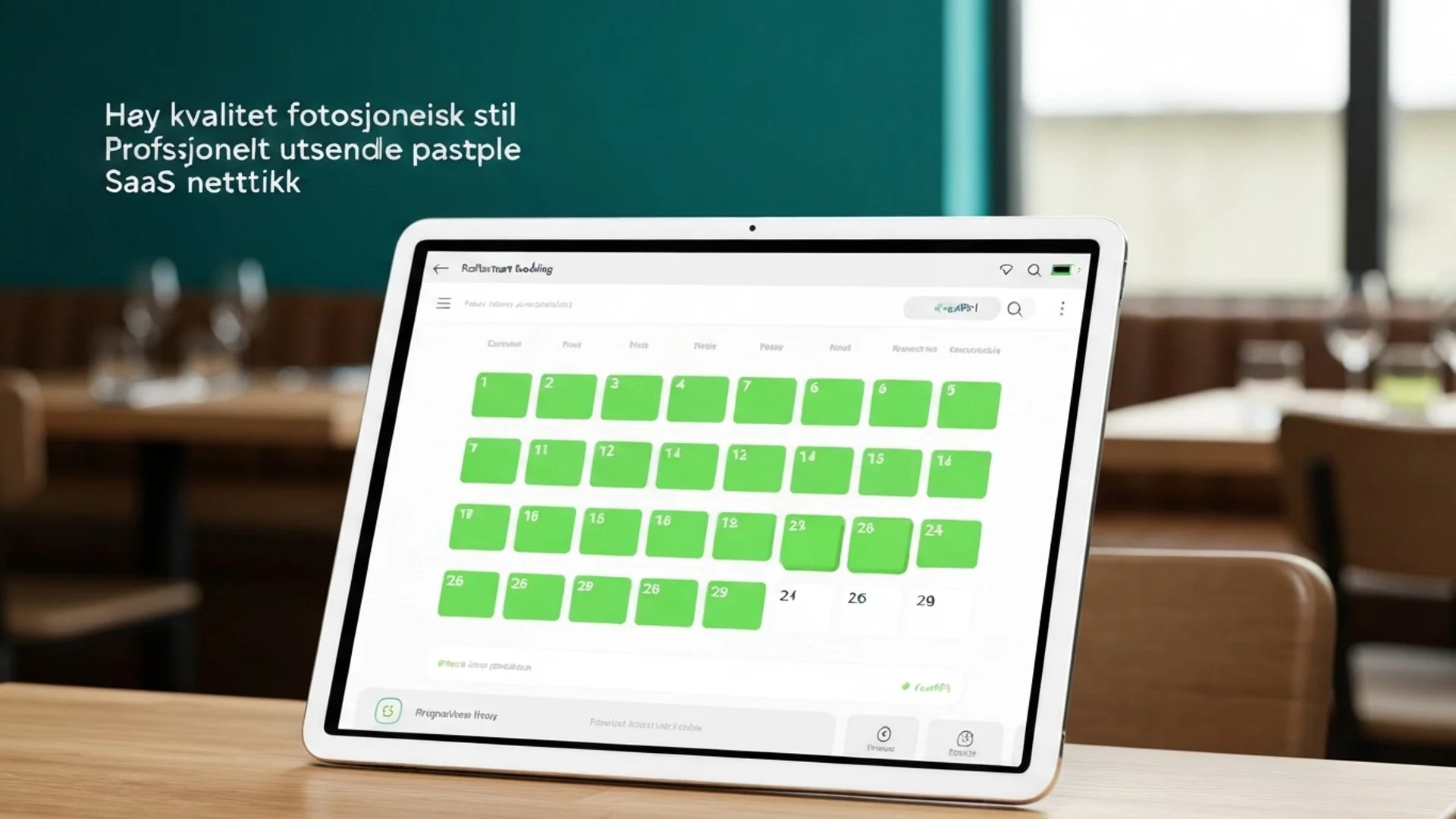
A guest finds your restaurant on Google. Your rating looks good -- 4.4 stars, recent reviews, photos of the terrace. They tap "Book a table." The widget loads. And loads. Three seconds pass. The slot grid appears but feels sluggish. They tap 7:30 PM. Another pause. A redirect to a third-party page. They squint at a form they did not expect to see.
They close the tab. They book somewhere else. You will never know they existed.
This happens every day, at every restaurant with a slow or fragmented booking flow. The difference between this scenario and a bad review is that the bad review is visible. The abandoned booking is silent.
Restaurant owners check their Google rating daily. They read reviews. They worry about stars. A Harvard Business School study found that a one-star increase on review platforms leads to a 5-9% revenue increase for independent restaurants -- a real and meaningful number.
But here is a number that gets far less attention. A study of over 100 million page views found that e-commerce conversion rates drop from 3.05% at a 1-second load time to 0.67% at 4 seconds. That is a 78% collapse in conversion -- from three added seconds.
53% of mobile visitors abandon a page that takes longer than 3 seconds to load.
These are not restaurant-specific numbers. They come from e-commerce and web performance research. But your booking widget is an e-commerce transaction. A guest selecting a date, choosing a time, entering their details, and confirming -- that is a checkout flow. The same psychology applies: every second of friction loses a percentage of potential customers who never come back.
The difference is that a retailer losing 78% of conversions would notice. A restaurant losing bookings to a slow widget does not see it happening, because abandoned booking attempts do not show up in any report.
The term gets thrown around loosely. Some systems claim real-time availability but actually sync every 15 minutes. That distinction matters -- 15 minutes on a busy Friday evening is an eternity. Multiple bookings can come through different channels, all believing the same table is open.
Real-time means three things in practice:
Instant update. When a walk-in takes the last 7:30 table, the website widget reflects that change in the same moment. Not in 5 minutes. Not after the host remembers to update the system. Immediately.
Universal sync. Your website, your Google listing, the link on your Instagram bio, and the host's screen all show the same availability at every point in time. There is never a gap where one channel shows something different from another.
Instant confirmation. When a guest books, they have that table. No waiting for approval, no "we'll confirm within 24 hours." The confirmation is the booking.
That last point has measurable consequences. A survey of 1,200 consumers found that bookings confirmed instantly had an 89.2% show rate, compared to 63.5% for bookings confirmed after a 4-24 hour delay.
A 25-point gap in show rates. The request-and-wait model does not just frustrate guests -- it produces more no-shows, because the commitment weakens during the wait.
It is 7:15 PM on a Saturday. Your host just seated a walk-in party of four at the only remaining table that could fit them. Meanwhile, a guest on your website is looking at that same time slot, which still shows as available because the system has not updated. They book it. They get a confirmation email.
Now you have two parties arriving for one table.
This is not an edge case. It is the structural result of running separate systems for different booking channels -- an online platform for web bookings, a notebook or separate system for phone calls, a third tool for Google. 57% of full-service restaurants accept online reservations, but 93% still accept phone bookings too.
Every channel that operates independently is a channel that can contradict the others. The more channels you add without a shared source of truth, the higher the probability of conflicts.
One Reserve with Google integration partner openly documents that availability syncs to Google only once per day -- at 11:30 PM. Restaurants with limited seating are explicitly warned the integration "might not be suitable" as it "could potentially cause customer booking issues."
A daily sync on a channel where the majority of bookings come from first-time guests -- people who have no prior relationship with your restaurant and no reason to forgive a booking mistake.
Your phone goes to voicemail at 10 PM. Your staff is gone. But 18% of restaurant bookings occur between 10 PM and 10 AM, when most restaurants are closed.
66% of diners now book on the same day they plan to eat.
These two facts compound. A tourist deciding at 11 PM where to eat tomorrow -- or a local remembering over a nightcap that they need a table for Friday -- will book wherever shows availability right now. If your system is offline, or shows yesterday's slots, or requires a phone call during business hours, the booking goes to the restaurant down the street whose widget works at midnight.
The gap between "I want to eat there" and "I'll call them tomorrow" is where you lose the booking. Tomorrow, the impulse has faded. They forgot, or they booked somewhere else in the meantime, or they decided to cook at home.
Byron Puck, president of the Wolfgang Puck Fine Dining Group, put it simply: "The consumer can book in so many different ways now. It's our job to meet the consumer where they are."
Meeting them where they are means meeting them at their speed. In 2026, that speed is shaped by every other digital transaction in their life -- ride-hailing, grocery delivery, flight booking. They do not consciously compare your booking widget to an airline's checkout, but their patience threshold has been calibrated by thousands of instant transactions.
A booking widget that loads in under a second and shows all available slots immediately feels like everything else in their digital life. One that takes 4 seconds, redirects to another domain, and then asks for information they already entered feels broken by comparison.
52% of travelers report abandoning an online booking specifically due to a bad experience.
And here is the structural point that matters: Google launched automated restaurant booking in April 2026, handling the full workflow -- finding restaurants, checking availability, confirming bookings -- inside Google Search itself.
Restaurants without real-time availability exposed via API are invisible to this channel. Not disadvantaged. Invisible. The search engine is becoming a booking engine, and only restaurants with live, accurate availability will appear in it.
Not every restaurant needs instant booking. An 8-seat omakase counter running a single service needs the request-and-confirm model -- the chef has to communicate with guests about dietary needs and build a personalized menu. A chef's table experience with a single seating per night has legitimate reasons to curate who books.
But these are the exceptions. For the 60-cover neighbourhood bistro, the mid-sized brasserie, the casual dining spot with a terrace and a lunch crowd -- the request model adds friction that serves nobody. Every hour of delay between booking request and confirmation is an hour where the guest might book elsewhere, or decide to skip dining out entirely.
78% of consumers expect booking confirmation within 60 seconds. 52% expect it in under 10 seconds.
Those expectations were not set by restaurants. They were set by every other app on the guest's phone.
Nine Tables checks availability for all time slots in a single operation when a guest opens the booking widget. Every table, every time slot, every dining area -- evaluated at once and returned in one response. The guest sees a clear picture of the evening in one glance.
Every channel connects to the same availability engine. The website widget, Instagram booking link, Google integration, and the host's dashboard all draw from and write to the same real-time data. When a walk-in is seated, online availability updates in the same moment.
When a guest cancels, the released slot opens across all channels instantly. If a table opens at 2 PM on Saturday, someone searching at 2:01 PM will see it.
This is not a feature we added later. It is the architectural foundation. A booking system where channels can contradict each other is not a booking system -- it is a liability.
You can see your Google rating. You can count your reviews. You can read what guests say about the food, the service, the atmosphere. But you cannot see the guest who tried to book, hit a loading spinner, and left.
That invisible attrition -- the bookings that die in the widget before they become reservations -- is the metric most restaurants have never measured. And the research suggests it is larger than many of the visible problems owners spend their time on.
A booking funnel analysis breaks down where guests drop off between discovery and confirmation. If you have not looked at yours, you might be surprised at where the losses are.
Your tables are a perishable asset. An airline would not let a seat go unsold because the booking page was slow. Your 7:30 PM Saturday table has the same economics -- once service starts, that revenue is gone. The question is not whether real-time matters. It is whether you are measuring what happens when it is missing.