April 21, 2026
9 min read
Monday, Tuesday, and Wednesday combined barely match one Saturday for bookings. A discount fills a seat. An identity fills a night.
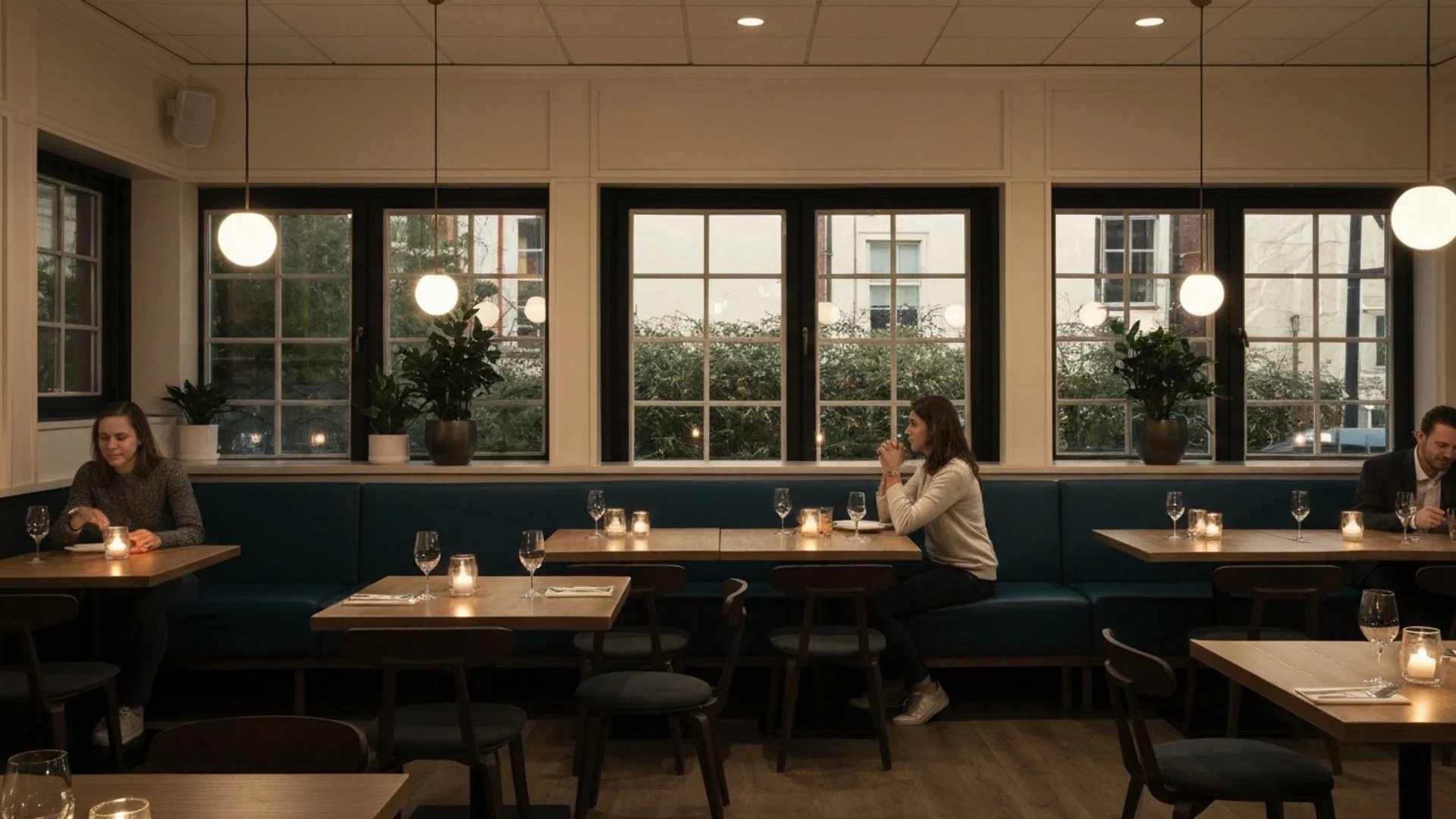
Monday gets 6% of the week's reservations. Tuesday gets 8%. Wednesday, 10%. Add them together and you get 24% — less than Saturday pulls on its own at 27%.
Three evenings. Three full staffing cycles. Three rounds of rent, electricity, and insurance — all running regardless of whether anyone walks through the door. Full-service restaurants pay a median 5.7% of sales in occupancy costs, and that number does not flex because Tuesday was empty.
The conventional response is to discount. Run a Tuesday special. Drop the price until someone bites. This works — in the narrow sense that discounted seats fill faster than full-price ones. But it creates a different problem. A Tuesday known for its 30% discount is a Tuesday that teaches guests to wait for the deal. It trains your market to associate your quietest night with your cheapest price, and once that association sets, it is very hard to reverse.
The alternative is to give the night an identity — a reason to visit that has nothing to do with saving money. A named night with a purpose beats a percentage off every time.
The barriers to weeknight dining are not about your restaurant. They are about how people live.
Routine. Most people eat out on weekends because that is when they have always eaten out. The habit is social and deeply ingrained. Breaking it requires a deliberate reason.
Energy. After a full day of work, the couch wins more often than a restaurant. It is not that people do not want to eat at your restaurant on Tuesday. It is that Tuesday needs more motivation than Saturday. The barrier is real and physical — getting dressed, driving, committing to an evening out.
Budget. Weekend dining is planned. Weeknight dining feels spontaneous and, for many households, financially guilty. 62% of consumers cite price as the top constraint on how often they eat out.
Coordination. Getting friends together on Saturday takes one text message. Getting the same group together on Tuesday takes a week of planning. Weeknight dining trends toward couples, solo diners, and small groups — which changes the experience you should design.
But here is the thing people miss: the demand is there. 43% of Americans say they deliberately plan midweek dining to "break up the work week."
Wednesday dining reservations grew 11% year-over-year in the first three quarters of 2024 — the largest single-day increase of any day.
People want to eat out on weeknights. They just need a reason that overcomes the inertia. A discount is one kind of reason. An identity is a better one.
An identity night is a recurring concept that makes a specific evening at your restaurant the answer to a specific question. Not "where should we eat tonight?" but "is it wine night this week?"
A wine pairing dinner on the first Wednesday of every month. A live acoustic set every Tuesday. Trivia every Thursday. The format matters less than the rhythm — the fact that it happens on the same night, at the same time, and guests can plan their week around it.
The format should match your restaurant. A jazz trio in a fine dining room. A solo guitarist in a casual bistro. A chef's table experience in a restaurant with a strong kitchen personality. The event should feel like a natural extension of your brand, not an afterthought grafted onto a quiet night.
A well-priced set menu — three courses for a price that would cost 30 to 40% more à la carte — gives guests a simple decision. The value is obvious. The choice is made before they walk in.
The prix fixe benefits your kitchen too. Fewer options means tighter prep, less waste, and faster execution. Your Tuesday operation can be leaner and still feel generous. Rotate it monthly or seasonally, and regulars have a reason to come back: "What is the Tuesday menu this month?"
Industry night for hospitality workers. Kids-eat-free for families. A cookbook club. A neighbourhood regulars' table. These formats build community rather than extract transactions. The guests who come become advocates — "we go to [your restaurant] every Tuesday" — and that word of mouth is worth more than any paid promotion.
The financial argument is straightforward. Acquiring a new customer costs several times more than retaining an existing one. Industry estimates put casual dining acquisition at EUR 60 to 120 per new guest.
An identity night converts first-timers into regulars. And the data on regulars is striking: analysis of 18 million guest records by Olo found that the top 5% of a restaurant's guests generate 30% of its revenue. The top 20% generate 60%.
Meanwhile, an estimated 70% of first-time diners never return.
Discounting attracts the price-sensitive. Identity attracts the curious. The difference matters because the curious diner who comes for wine night and has a good experience becomes a Tuesday regular. The discount diner who came for 30% off may not come back at full price.
This is not hypothetical. Venues running targeted off-peak programmes saw 26% higher revenue and 33% more transactions during promoted hours compared to venues without them.
21% of restaurant revenue already comes from non-core offerings — events, catering, experiences — and 88% of operators plan to expand these.
The trend is clear. Restaurants are finding revenue in experiences, not just meals.
A 50-seat restaurant, Wednesday evening. Average check EUR 45. Currently running at 30% capacity — 15 covers.
Revenue: EUR 675. Labour for the evening (3 staff, 5 hours, EUR 15/hour): EUR 225. Food cost at 30%: EUR 202. Contribution after variable costs: EUR 248. Not enough to meaningfully offset the fixed costs (rent, utilities, insurance) that run whether the restaurant is open or not.
Now give Wednesday an identity. A weekly prix fixe with a local wine pairing, promoted through your guest database. Capacity rises to 55% — 28 covers. Check average drops slightly to EUR 40 (the prix fixe is a value play) but volume more than compensates.
Revenue: EUR 1,120. Labour (4 staff, same rate): EUR 300. Food cost at 28% (prix fixe is pre-planned, waste is lower): EUR 314. Contribution: EUR 506 — more than double. Over a year, that is an additional EUR 13,400 from one evening per week.
And the 13 additional guests each week become potential regulars. If even 3 of them come back on a different night within the month, the compounding value dwarfs the Wednesday revenue itself.
Having a great weeknight concept means nothing if nobody knows about it.
Restaurant SMS messages have a 98% open rate with 8 to 15% conversion rates. On a slow Tuesday afternoon, a targeted text at 2 PM to previous weeknight guests can fill tables for that evening: "Quiet night at [Restaurant]. Your favourite table is open at 7:30."
The key is segmentation. Target guests who have visited on weeknights before. Target guests who live nearby. Target guests who have not visited in a while. A generic blast to your entire list is noise. A message that reaches the right person at the right moment is a booking.
For recurring events — the wine dinner, the prix fixe launch, the cooking class — email gives guests time to plan. Send the announcement two to three weeks ahead. Follow up a week before. Include a direct booking link.
Restaurant emails have a 40% open rate — 12 points above the cross-industry average.
Your guest database is a direct channel to people who have already chosen to eat at your restaurant. They do not need to be convinced of your quality. They just need a reason to come on a specific night.
Post about your weeknight offering regularly. Not once. Regularly. People scroll past things. They see your Tuesday concept and think "that sounds nice" but do not act. The next time they see it, they are free. The third time, they book.
Include your booking link in every post. The path from "that sounds good" to "booked" should be one tap.
Running a quiet night the same way you run a Saturday is a margin error.
Staff for reality, not aspiration. If your Tuesday averages 30 covers, staff for 35. Not 60. Your team earns better money per person when the floor is appropriately sized. One server managing too many tables on a quiet night creates worse service than a busy Friday, because the lack of attention is conspicuous when the room is half empty.
Close sections strategically. If you normally run three dining areas, close one on quiet nights. Consolidate guests. A half-full section feels busy. The same number of guests scattered across the entire restaurant feels dead. This is psychological, but it matters enormously — guests pick up on energy.
Simplify the menu. A streamlined weeknight menu reduces prep, waste, and kitchen complexity. It can feel intentional: "our weeknight tasting menu" is a different proposition from "we do not serve the full menu on Tuesday."
A weekly Tuesday regular is worth far more than their tab suggests.
52 visits per year. They bring friends occasionally — introducing your restaurant to people with zero acquisition cost. They become ambassadors: "We go to [Restaurant] every Tuesday, you should come."
And the guests who come on quiet nights are often the most loyal. They chose your restaurant when it was easy to stay home. That kind of relationship is built on genuine appreciation, not weekend social pressure.
Weeknight traffic does not transform overnight. When you launch a new concept, expect four to six weeks of awareness-building. Eight to twelve weeks before it feels established. Four months before it sustains itself.
Do not abandon a strategy after three slow Tuesdays. Promote consistently. Refine based on what your booking data tells you. The restaurants that crack quiet nights are the ones that commit to the identity long enough for habits to form.
You do not need Friday-level crowds on Tuesday. You need enough covers to justify being open, to keep your staff engaged and earning, to give your kitchen reps, and to build relationships that carry into weekends.
A good Tuesday is 55 to 60% of a good Friday. That means your restaurant generates revenue six or seven days a week instead of three or four. Your staff have consistent hours. Your fixed costs spread across more revenue. Your guest base deepens.
Every restaurant has slow nights. The ones that succeed do not fill them with discounts. They fill them with reasons — a name, a concept, a recurring event that makes Tuesday the answer to a question guests were already asking.
Give the night a name. The people will follow.