April 21, 2026
9 min read
Weekend reviews are measurably harsher than weekday reviews. The rush you survive on Friday determines whether Saturday books up or stays flat.
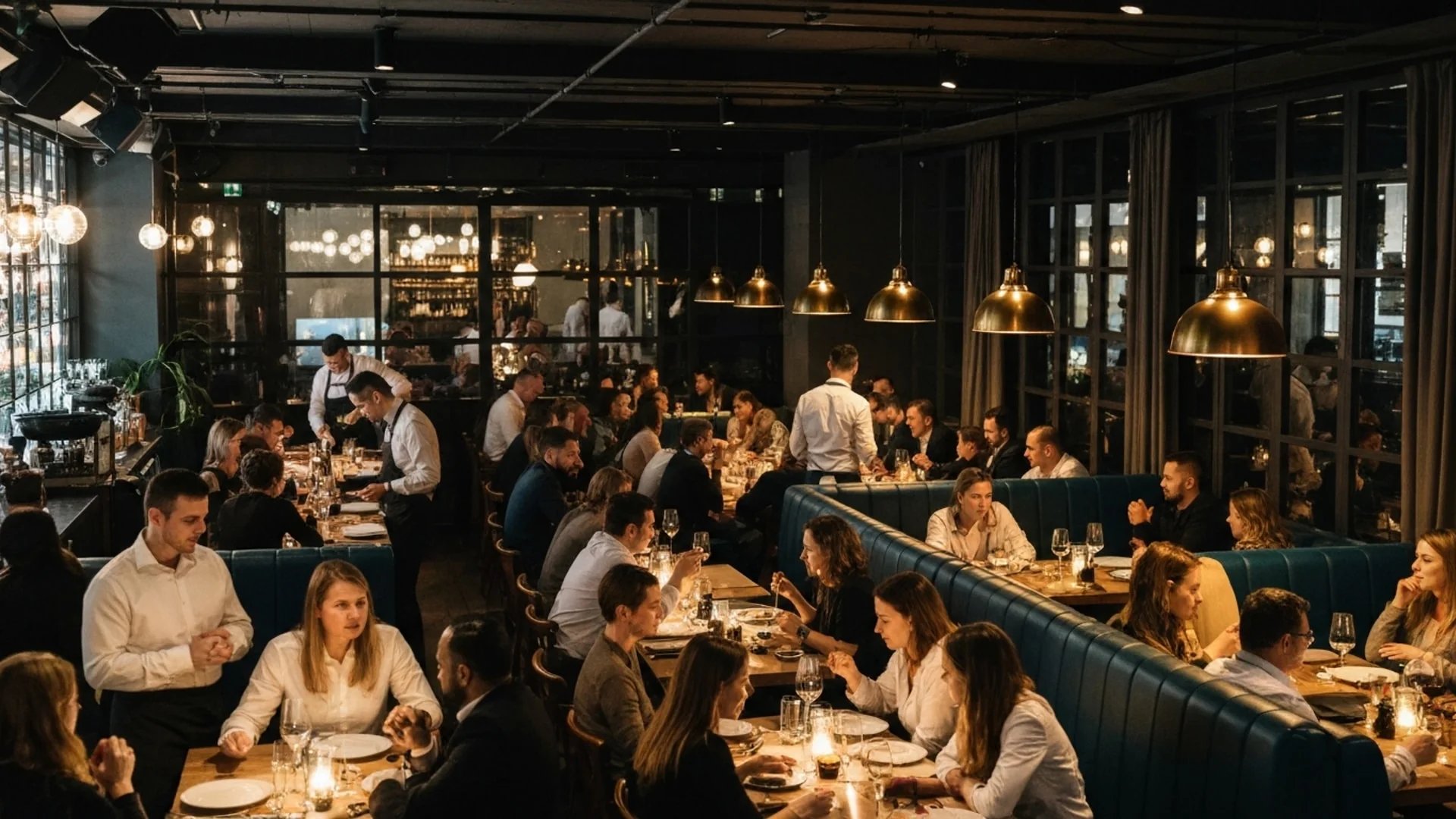
It is 7:42 PM on a Friday. Every table is full. The host has three tickets in her hand, a walk-in party of four at the door, and a server who just asked where the risotto for table 12 went. The kitchen is running six minutes behind. The phone is ringing. Nobody is answering it.
This is the moment that determines next week's Saturday.
Not because of the revenue — though Friday and Saturday together generate more than 25% of a typical restaurant's weekly sales.
Because of what happens when the rush goes wrong. A study analysing 400 million reviews across 33 platforms found that reviews written on weekends are measurably lower-rated than those written on weekdays — not because weekend food is worse, but because peak-hour pressure creates the conditions for the kind of failures guests remember.
The restaurant that survives Friday night keeps its Saturday bookings. The one that stumbles — long waits, wrong orders, overwhelmed staff — watches the reviews land before brunch.
A single negative review deters future guests. Research from Harvard Business School found that each one-star improvement on Yelp translates to a 5 to 9% increase in revenue for independent restaurants.
The inverse holds. A dropped star — or a cluster of one-star reviews from a single bad weekend — erodes revenue by the same margin. At EUR 40,000 per month, 5% is EUR 2,000 in lost revenue. Per month. Recurring.
And the damage compounds beyond reviews. 80% of consumers say they actively avoid businesses where they anticipate a wait.
If your Friday reputation becomes "expect to wait," guests stop booking altogether. They do not call to complain. They go somewhere else.
The industry is already running thin. The monthly quit rate in accommodation and food services hit 3.9% in 2024 — more than double the national average.
52% of hospitality workers who left their jobs cited burnout as the primary reason.
You cannot solve Friday night by adding bodies you do not have. 57% of restaurants were understaffed by more than 10% in 2024.
The answer is not more staff. It is better preparation with the staff you have.
The single highest-leverage change most restaurants can make to their Friday service is spreading arrivals across the evening instead of clustering them at the half hour.
Research from Cornell found that even modest flexibility in reservation timing — offering 10- or 15-minute intervals instead of fixed 30-minute blocks — increases restaurant revenue by 3.7% at the low end and up to 22% with full flexibility.
A separate Cornell study on reservation pooling found that grouping bookings into staggered windows reduced table turn times by 15 or more minutes in over 15% of scenarios.
The arithmetic is straightforward. Thirty covers arriving between 6:45 and 7:45 in five-minute increments produces a steady flow the kitchen can manage. Thirty covers arriving at 7:00 and 7:30 produces a 20-minute window where the pass is underwater and every table is waiting.
The second scenario is not busier. It has exactly the same covers. It just compressed them into a window the kitchen cannot serve without shortcuts. Those shortcuts — rushed plating, cold starters, skipped quality checks — are what generate the reviews that damage next Saturday.
Fifteen minutes of structured preparation before Friday service prevents two hours of reactive chaos during it.
Every server should know before the first guest arrives: how many covers tonight, which tables have dietary requirements, where the large parties are sitting, who the VIPs are, what the kitchen is watching. This is not a motivational speech. It is a tactical download.
A manager who walks the floor during the rush answering questions that should have been covered in a briefing is a manager not solving the actual problems of the rush.
When you know your reservation mix in advance, the kitchen can prepare accordingly. Eight-top at 8 PM with two children? Prep the kids' plates early, have the high chairs ready, know which section can handle the volume. Three birthdays tonight? Desserts staged, candles counted, timing notes on the tickets.
This is where the reservation system earns its place. Not as a booking tool — as a prep tool. The information about tonight's service already exists in the bookings. The question is whether it reaches the kitchen and floor team before they need it.
When every person can only do one job, a single absence on Friday wrecks the night. But if your servers can run food, your host can help clear tables, and your bartender can help with seating, you have the flexibility to absorb the inevitable surprises.
Cross-training also builds empathy. Servers who have worked a kitchen shift understand why ticket timing matters. Hosts who have served tables understand why seating pace matters. The operational awareness spreads through the team, and Friday runs smoother because everyone sees the whole picture instead of their station alone.
During the rush, every minute of staff attention is a finite resource. Do not spend it on things a system can handle.
Confirmation messages go out automatically, reducing the phone calls that tie up your host during service. SMS has a 98% open rate — dramatically higher than email. Guests confirm, cancel, or modify via text instead of calling during your busiest hour.
Wait time updates go to guests digitally, so your host is not walking to the door every five minutes to update the party of six who are still nursing drinks at the bar.
Table status updates in a digital floor plan, so the host knows which tables are clearing without asking the server or walking the dining room.
Each of these is a small time saving. Together, they give your host — the single person most responsible for Friday night's flow — the bandwidth to actually manage the room instead of being consumed by it.
Here is the counter-argument, and it is a real one.
Research from Cornell's hospitality programme found that perceived crowding in a restaurant actually increases service quality ratings — but only for guests with hedonic (pleasure-seeking) dining goals. Friday diners are almost entirely hedonic. They want the buzz, the energy, the sense of being somewhere alive.
A full restaurant on Friday is an asset, not a liability. The problem is not being busy. The problem is being busy and unprepared for it.
A packed dining room where arrivals are staggered, the kitchen is paced, the staff knows what is coming, and the host has bandwidth to manage the flow — that room generates energy. Guests feed off it. They stay longer, order another bottle, tell friends.
A packed dining room where the kitchen is drowning, the wait is unknown, and the server has not been to the table in 12 minutes — that room generates reviews. Bad ones.
The goal is not to reduce Friday's volume. It is to run Friday's volume cleanly.
Before every Friday service:
Two hours before: Review tonight's bookings. Note large parties, dietary requirements, VIPs, special requests. Confirm staffing matches expected volume. Identify the busiest 90-minute window and ensure full coverage.
One hour before: Kitchen prep aligned with the booking mix. Backup plan for the likeliest problem (a large party running late, a no-show on a fully booked night, a server calling in sick).
Fifteen minutes before: Pre-shift briefing with the team. Specific, tactical, brief. Who needs to know what.
During service: One person — the manager, the head server, whoever owns the floor — watches the pace, not the tables. Their job is not serving. It is seeing the pattern: which tables are about to clear, where the bottleneck is building, when the kitchen needs a pause.
Nine Tables was built for service, not just for bookings. The booking timeline shows tonight's reservations distributed across the evening — you see the clusters before they create kitchen bottlenecks.
Configurable booking intervals — 10, 15, or 30 minutes — let you spread arrivals instead of accepting the default half-hour pile-up. Confirmation and reminder messages go out automatically, reducing the phone calls that compete with in-person guests during the rush.
The pre-service view shows tonight's guest count, party sizes, dietary requirements, and special requests in one screen. Your team walks into Friday prepared, not surprised.
The restaurants that build loyal weekend followings are not the ones with the best food on a quiet Tuesday. They are the ones that deliver a consistent experience when the pressure is highest.
Friday night is where that consistency is tested. Every staggered reservation, every pre-shift briefing, every automated reminder, every cross-trained server — they all compound into a service that feels effortless to the guest and controlled to the team.
Your staff deserve a Friday they can manage. Your guests deserve a Friday that matches their expectations. Your Saturday bookings depend on both.
Run Friday cleanly, and Saturday takes care of itself.