April 21, 2026
10 min read
Airlines made billions from overbooking. But a bumped diner does not accept a voucher and come back tomorrow. Prevention beats compensation every time.
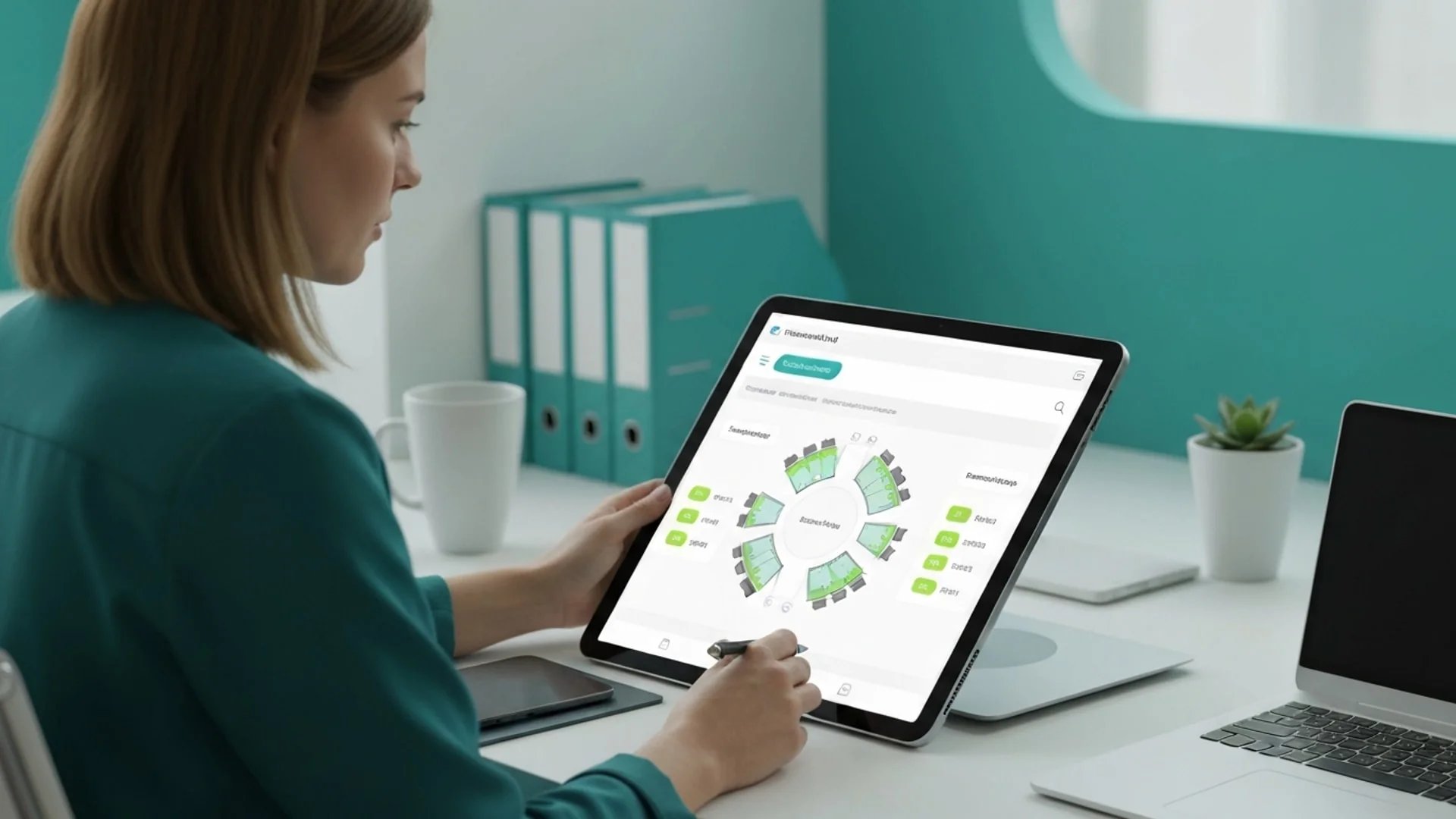
The UK no-show rate for restaurants doubled from 6% to 12% between 2022 and 2023.
Every one of those empty chairs cost the restaurant an average of £89 — not just the lost meal, but the wasted prep, the unused staff hours, and the walk-in turned away from a table that was technically "taken."
Faced with that math, some restaurants turn to the same tool that airlines have used for decades: deliberate overbooking. Accept more reservations than you have tables, count on a percentage not showing up, and hope the numbers balance out.
Here is why that is almost always the wrong response.
The case for overbooking is not irrational. American Airlines attributed $1.4 billion in additional revenue over three years to its yield management system, which includes overbooking. Robert Crandall, its former CEO, called the practice "the single most important technical development in transportation management since we entered deregulation."
Hotels do it too. A 2025 study of 365 hotel properties in the International Journal of Hospitality Management found that hotels using risk-based overbooking — less than 5% of capacity, 6 to 10 days per month — measurably outperformed non-overbooking properties on revenue per available room.
So the practice works. In airlines and hotels.
But restaurants are not airlines. The differences are structural, not cosmetic.
Airlines have been refining overbooking algorithms since 1968 — over fifty years of route-level data, fed into sophisticated prediction models, regulated by federal oversight. Even with all of that, US airlines still involuntarily denied boarding to passengers at a rate of 0.28 per 10,000 in 2024. They still get it wrong.
Now consider your restaurant. You do not have 50 years of seat-level data. You do not have route-specific cancellation models. You do not have the ability to offer a bumped guest a voucher, a rebooking on the next flight, and compensation under federal regulation. You have a couple standing at your host stand at 7:30 on a Saturday, dressed for the evening, and you have to tell them there is no table.
That couple does not accept a voucher. They do not come back tomorrow.
A peer-reviewed study published in the Journal of Marketing found that customers who experience the downside of overbooking — being bumped, downgraded, or turned away — significantly reduce their future spending with that business. Customers who receive the upside (an upgrade) show only weak positive responses. The damage from one bumped customer outweighs the gain from one upgraded customer.
Worse, the negative effects hit hardest on your best customers. High-value regulars — exactly the guests you can least afford to lose — react more strongly to being turned away than occasional visitors do.
There is also the question of intent. A separate study in the Journal of Travel Research found that customers perceive overbooking as an intentional act — a deliberate business decision, not an accident. Intentional service failures produce significantly more negative word of mouth and greater patronage reduction than unintentional ones.
When a kitchen sends out a cold plate, the guest assumes something went wrong. When a restaurant sells a table it does not have, the guest knows it was a choice. And that distinction matters. A lot.
Let me work through the numbers that overbooking advocates skip.
A 50-seat restaurant running Friday dinner service. Average check EUR 55. Full-service restaurant margins sit at a median of 2.8%.
At a 12% no-show rate, six seats go unused. That is EUR 330 in lost revenue. Painful. Over a month of Friday and Saturday services, roughly EUR 2,600.
Now say you overbook by six covers to compensate. Most nights, the math works — the no-shows and overbookings cancel out. But one Saturday, everyone shows up. You now have six guests with confirmed reservations and no table.
The immediate cost: complimentary drinks while they wait, a manager pulled from the floor for 20 minutes, a hasty rearrangement that slows service for surrounding tables. Call it EUR 150 in comps and staff time.
The hidden cost: one of those six parties writes a review. "Had a reservation, waited 30 minutes, got a terrible table." Negative reviews compound — research from Harvard Business School found that each one-star decline on Yelp corresponds to a 5 to 9% drop in revenue for independent restaurants.
At 2.8% margins, you cannot afford the lottery. A restaurant doing EUR 40,000 per month has EUR 1,120 in profit. One bad overbooking night with comps and a review-driven traffic drop wipes that out.
The no-show problem is real. But the overbooking cure is often more expensive than the disease. Fortunately, better cures exist.
Most double-bookings are not deliberate overbookings. They are accidents — the predictable result of taking reservations through multiple channels that do not talk to each other.
93% of full-service restaurants that take reservations allow booking through third-party websites or apps, in addition to their own website and phone.
Mark Stanforth, who runs The Shoulder of Mutton in West Yorkshire, described the problem precisely: "Same-day bookings can be a challenge as care needs to be taken to avoid a last-minute booking being allocated to a table that's just been occupied by a walk-in."
It is 6:47 PM. A guest books online. At 6:48 PM, a phone reservation goes into a paper book for the same slot. Neither system knows about the other. The host seats a walk-in at a table that appears open in the physical dining room but is reserved in the digital system. These are not overbooking failures. They are synchronisation failures. And they are entirely preventable.
When restaurants add a new booking channel — say, Reserve with Google — the volume increase is immediate. Data from a study of 1 million bookings across 75 countries showed a median 32.3% booking increase when restaurants activated Google as a channel.
More channels mean more bookings. They also mean more opportunities for the left hand to not know what the right hand is doing, unless every channel feeds the same availability pool in real time.
The data on alternatives to overbooking is not equivocal. It is overwhelming.
Oxeye, a London restaurant, charged a £50 deposit per person. The result: zero no-shows for an entire year. When they experimentally dropped the deposit to £5, a no-show occurred within the first week and late cancellations increased.
That is not a gradual improvement. That is a binary switch.
Farmstead, a California restaurant, went from a 15% no-show rate to 1% after introducing deposits.
And contrary to what many operators fear, guests accept deposits. Three in four diners say they are open to paying a reservation deposit.
The threshold matters. A token amount — a few pounds — has almost no deterrent effect, as Oxeye discovered. A meaningful deposit creates commitment. The amount signals that the reservation is real, that the table is being held, that this is a mutual agreement.
Restaurants using full prepayment models report no-show rates of just 0.9%. Credit card holds — less friction than prepayment — bring the rate down to 3%.
To put that in perspective: the academic baseline for restaurant no-shows without any mitigation is 9 to 13%.
Prepayment does not just prevent no-shows. It also increases per-guest spending — guests who have already committed financially tend to spend 35% more on the evening.
Nearly half of diners who miss a reservation cite forgetfulness or laziness as the reason. Not malice. Not scheduling conflicts. They simply forgot.
SMS reminders reduce no-show rates by 27 to 38%. A systematic review of healthcare appointment reminders — the most studied version of this intervention — found a weighted mean reduction of 34% from baseline, with human-initiated reminders outperforming automated ones.
A confirmation message 24 hours before the reservation costs almost nothing and catches a third of the problem. Combined with a deposit that catches another third, you have addressed 80% of no-shows without overbooking a single table.
The right approach layers interventions based on risk.
For all reservations: Automatic confirmation at booking. Reminder 24 hours before. Easy cancellation link in the message — a cancellation is infinitely better than a no-show, because it releases the table for someone else.
For large parties and peak times: A deposit. Not punitive, but meaningful. Enough that the guest treats the reservation as a commitment, not an option.
For high-demand evenings: A waitlist that automatically fills cancellations. When a guest cancels at 4 PM on Saturday, the next person on the waitlist gets an immediate notification. The table never sits empty.
For walk-ins: Discipline at the host stand. The moment a walk-in is seated, it goes into the system. Not after they order. Not when there is a quiet moment. Immediately. Ten seconds of data entry prevents 20 minutes of chaos when a reservation arrives for an occupied table.
Larry McCabe, who owns Café Bouffon in Ontario, calculated that no-shows cost his restaurant roughly $30,000 in a single summer season. "We would have nights with a dozen or so no-shows at peak periods," he told CBC News.
A deposit system, a reminder system, and a waitlist would have recovered most of that. Overbooking would have risked turning it into a different kind of loss — the kind that shows up as a one-star review and a regular who never returns.
The foundation of prevention is a single source of truth. Every booking — whether it arrives from your website, Google, a phone call, or a walk-in — must land in the same availability pool. No exceptions. No "I will enter it later." No paper backup that creates a parallel universe.
Look for a system that updates availability across all channels in real time. Not batch-synced every 15 minutes. Not "usually within a few seconds." Instantly. Because overbooking from channel lag is the most common form, and it is the easiest to solve.
Staggered booking intervals matter too. Research from Cornell found that even modest flexibility in reservation timing — offering 10- or 15-minute intervals instead of fixed half-hour blocks — can increase restaurant revenue by up to 22%.
Spreading arrivals prevents the 7:00 PM pile-up that strains the kitchen and creates the pressure to overbook in the first place.
Nine Tables was built around this philosophy. Every channel connects to the same availability engine. Walk-ins go into the system the moment they sit down. Confirmation messages go out automatically. And the booking intervals are configurable — 10, 15, or 30 minutes — so arrivals spread across the evening instead of clustering.
I should be direct about what prevention costs. Deposits add friction. Some guests will abandon the booking when they see a deposit requirement. If you are a neighbourhood restaurant that relies heavily on casual walk-in-to-regular conversion, that friction may cost you more than the no-shows it prevents.
The calculus is different for different restaurants. A 25-seat restaurant with a loyal local base and a 3% no-show rate does not need deposits. A 100-seat restaurant in a city centre with a 15% no-show rate on Saturdays does.
The one approach that never makes sense is deliberate overbooking without the data infrastructure to support it. Airlines had fifty years and a federal regulator to get their model right, and they still bump people. The idea that a restaurant can do the same with a spreadsheet and a gut feeling is not optimism. It is risk without reward.
1 in 5 UK hospitality businesses have considered closing permanently because of no-shows and cancellations.
That is not a statistic about bad luck. It is a statistic about systems — or the lack of them.
The restaurants that never overbook are not the ones with reliable guests. Every market has no-shows. They are the ones that invested in prevention: deposits that create commitment, reminders that catch forgetfulness, real-time systems that prevent channel conflicts, and waitlists that turn cancellations into filled tables.
Overbooking solves a capacity problem by creating a trust problem. Prevention solves the capacity problem without creating anything new to worry about. The table is either available or it is not. No probability calculations. No hoping tonight is the night the math works out. No couple standing at the door wondering why their reservation does not exist.
That clarity is worth more than any overbooked table.